
Business expansion is an exciting milestone, but growth can introduce challenges that require careful planning. A company that adds employees, equipment, customers, inventory, or services may quickly discover that its existing facility was designed for a much smaller operation. What once worked efficiently can become crowded, inconvenient, or incapable of supporting increased demand.
Successful expansion therefore involves more than finding additional square footage. Businesses need to consider whether a new or renovated facility has sufficient plumbing, electrical capacity, heating and cooling, parking, storage, access points, and other infrastructure. Moving operations also requires careful coordination so the company can transition without creating unnecessary interruptions for employees or customers.
The physical appearance of the expanded business matters as well. Clean facilities, visible signage, maintained parking areas, and organized workspaces can influence the experience of employees, customers, vendors, and visitors. Addressing these considerations during the planning stage can be much easier than correcting problems after operations have already moved.
Every company’s expansion will look different, but a comprehensive approach can make the process easier to manage. By evaluating infrastructure, property needs, logistics, and long-term operations together, business owners can create a facility that supports growth rather than limiting it.
Preparing Your Building’s Plumbing for Increased Demand

Business growth can increase the demands placed on a building’s plumbing system. More employees may mean greater restroom usage, while restaurants, manufacturing facilities, medical offices, and other specialized businesses may have substantial additional water and drainage requirements.
A professional plumbing contractor can evaluate existing pipes, fixtures, drains, water supply, and other components before an expansion is completed. This can help determine whether the current system is suitable for anticipated use or whether modifications should be incorporated into the project.
Business owners should consider future demand rather than designing exclusively around current operations. If another round of hiring is expected within several years, planning for that possibility now may reduce the need to disturb finished spaces later.
Renovations can also provide opportunities to address aging components while walls, ceilings, or floors are already accessible. This may be more practical than discovering a plumbing problem shortly after the expanded space opens.
Plumbing plans should also account for the specific requirements of the business. Break rooms, restrooms, production areas, cleaning stations, and specialized equipment can all have different needs that should be identified early.
Creating a Comfortable and Efficient Indoor Environment
A larger facility may require a different approach to heating, cooling, and ventilation. Equipment that adequately served a smaller building or workforce may not be suitable after square footage, occupancy, or operational demands increase.
Professional HVAC companies can evaluate equipment capacity, airflow, zoning, ventilation, controls, and the condition of existing systems. This information can help businesses determine whether equipment should be modified, expanded, or replaced as part of the project.
Different areas may have very different comfort requirements. Offices, warehouses, customer-facing spaces, server rooms, kitchens, and production areas can generate different amounts of heat and require different levels of temperature control.
Energy efficiency is another important consideration. Expanding into a larger building naturally increases the amount of space that may require conditioning. Appropriate equipment, controls, insulation, and building-envelope improvements can help manage these additional demands.
Planning HVAC work before interior construction is complete can also simplify installation. Ductwork, vents, mechanical equipment, and controls may need to coordinate with walls, ceilings, electrical systems, and other components. Early planning can prevent conflicts later.
Choosing the Right Property for Your Growing Business

One of the biggest expansion decisions is determining whether to renovate an existing facility or relocate. When moving becomes the better option, selecting the right property requires evaluating much more than square footage.
Professionals specializing in commercial and industrial real estate can help businesses explore properties based on factors such as location, building type, available space, access, zoning, and operational requirements. Different businesses will prioritize these factors differently.
A retailer may value customer visibility and parking, while a warehouse operation might prioritize loading areas and transportation access. Manufacturers may need appropriate utility capacity, ceiling heights, floor strength, or specialized infrastructure.
Future growth should also influence the search. A building that barely accommodates today’s expansion could become restrictive again relatively quickly. Businesses may want to consider whether a property offers flexibility for additional employees, equipment, storage, or production.
Due diligence is essential before committing to a location. The physical condition of the building, necessary renovations, utility availability, and other property characteristics can significantly affect the true cost of moving into the space.
Planning an Organized Move Into a Larger Space
Moving a business is considerably different from moving a household. Furniture may represent only a small portion of what needs to be transported. Computers, inventory, equipment, files, shelving, machinery, and specialized materials may all need to reach the new location in a specific order.
A commercial moving company can help coordinate transportation and develop a plan based on the type and volume of items being moved. Businesses should begin preparing well before the desired relocation date.
Creating an inventory can help identify what should move, what should be replaced, and what is no longer necessary. There is little reason to pay to transport obsolete equipment or materials that the company does not intend to use.
Timing is another major consideration. Businesses may need to schedule moving activities outside normal operating hours or complete the transition in stages to minimize disruption.
Technology deserves its own plan. Computers, phones, networking equipment, and other systems may need to be operational before employees arrive. Coordinating movers, IT professionals, utilities, and facility managers can help the new location become functional as quickly as possible.
Keeping Your Expanded Facility Clean and Professional
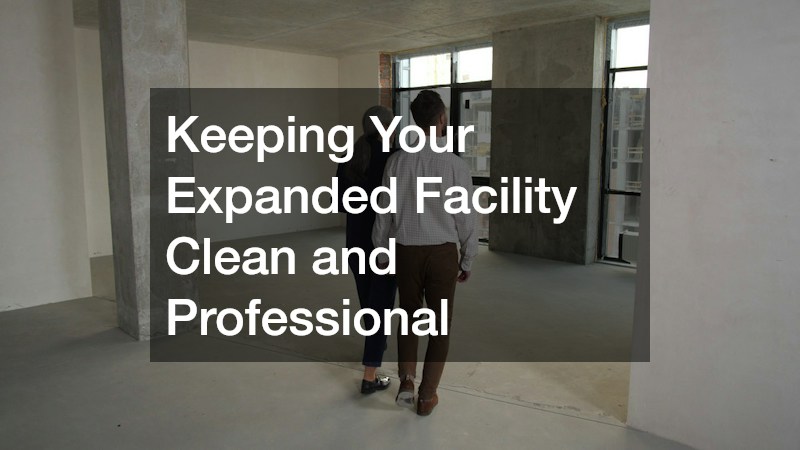
More space usually means more surfaces, restrooms, workstations, common areas, and floors that require regular cleaning. A maintenance routine that worked in a smaller office may become inadequate once the company expands.
A professional commercial cleaning company can develop services around the size, layout, schedule, and specific needs of the facility. Offices, medical environments, retail stores, warehouses, and other commercial properties can require very different cleaning approaches.
High-traffic areas deserve particular attention because dirt and debris can accumulate quickly around entrances, hallways, restrooms, break rooms, and customer-facing spaces. Maintaining these areas can contribute to a more professional appearance.
Businesses should also plan for waste collection, recycling, restroom supplies, and periodic deep cleaning. Establishing responsibilities before opening the expanded facility can prevent these tasks from becoming inconsistent.
Cleanliness can influence more than appearances. Organized and maintained spaces can create a more pleasant environment for employees and visitors. When cleaning requirements are incorporated into the operating budget from the beginning, the company is less likely to underestimate the ongoing costs associated with a larger facility.
Removing Outdated Structures to Make Room for Growth
Some expansion projects begin with removal rather than construction. Existing walls, buildings, interior improvements, or other structures may no longer fit the company’s plans and need to be removed before new work can begin.
A professional commercial demolition service can handle demolition according to the scope of the project and site conditions. The process may involve much more than simply tearing down a structure. Utilities, surrounding buildings, debris management, access, and safety all need to be considered.
Before demolition begins, businesses should understand what is being removed and what must remain protected. Selective interior demolition requires particular care because existing structural components and systems may need to stay intact while nearby materials are removed.
The project schedule should also account for debris removal and site preparation. New construction cannot necessarily begin immediately after demolition if additional cleanup, inspections, or preparation is required.
Coordinating demolition with architects, contractors, engineers, and other relevant professionals can help make sure the cleared area is properly prepared for the next stage of expansion rather than creating unexpected complications.
Improving Access, Security, and Daily Operations
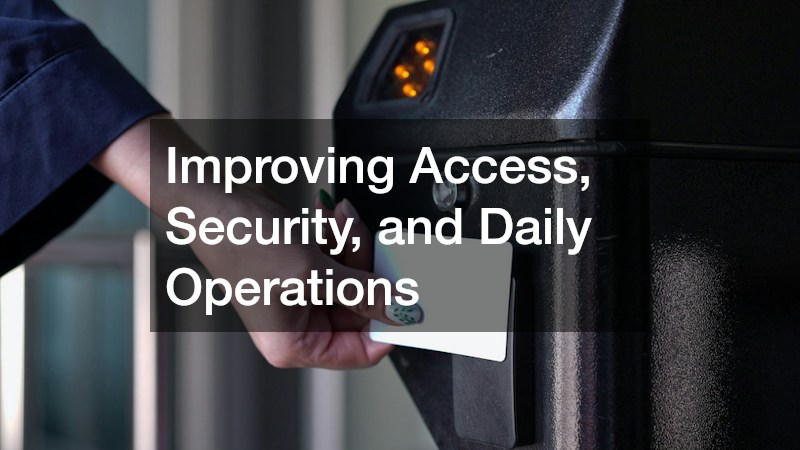
Commercial doors can play an important role in warehouses, service businesses, manufacturing facilities, storage areas, and other operations that regularly move vehicles, equipment, inventory, or deliveries through the building.
A professional commercial garage door installer can help businesses select door systems appropriate for the size of openings and the way the facility operates. Important considerations may include frequency of use, clearance, available space, security, insulation, and the types of vehicles or equipment passing through.
Traffic flow should be considered before doors are positioned. Poor placement can create congestion, interfere with loading activities, or force vehicles to maneuver unnecessarily around the property.
Security is another factor. Access points need to support efficient operations without creating avoidable vulnerabilities. Businesses should consider who needs access, when doors will be used, and how different areas of the facility should be controlled.
Door systems also require ongoing inspection and maintenance, particularly when they are used repeatedly throughout the workday. Including these requirements in the facility’s maintenance plan can help keep an important operational component functioning reliably.
Building Visibility and a Strong Presence at Your New Location
Relocating or expanding can create an opportunity to strengthen the company’s physical presence. Customers, delivery drivers, job applicants, and other visitors should be able to identify the property and understand where to enter.
Professional commercial signs can display the business name, branding, directions, building information, or other useful details. Exterior signage should be planned according to the property, visibility needs, and applicable local requirements.
Placement matters considerably. A sign that looks attractive near an entrance may not be visible from the road, while a large roadside sign may still need supporting directional signs within a complex commercial property.
Interior signs can improve navigation as well. Reception areas, departments, restrooms, loading zones, restricted areas, and parking sections may all benefit from clear identification.
Businesses should coordinate signage with the overall exterior design rather than treating it as an afterthought. Colors, lighting, scale, and materials can help the signs complement the building while remaining readable. Planning signage before opening also reduces confusion when customers begin visiting the new location.
Ensuring Your Electrical System Can Support Business Growth
Modern businesses depend heavily on electricity. Computers, lighting, manufacturing equipment, refrigeration, charging systems, communications technology, and countless other devices can create substantial electrical demand.
A professional commercial electrician can evaluate the building’s existing electrical infrastructure and determine whether it can support planned operations. Expansion may require additional circuits, outlets, panels, lighting, equipment connections, or other upgrades.
Business owners should provide as much information as possible about equipment that will be installed. Large machinery or specialized systems may have requirements that need to be considered well before move-in.
Future needs are important too. Adding some flexibility during construction may make it easier to install new equipment or rearrange work areas as the company grows.
Electrical planning should also coordinate with the rest of the project. Walls, ceilings, workstations, equipment layouts, and data infrastructure can all influence where electrical components need to be located.
Addressing capacity and layout before employees occupy the space can reduce reliance on temporary solutions and help create a facility designed around actual business operations.
Creating Safe and Durable Parking and Driving Surfaces
The condition of parking lots and driving areas can influence both functionality and the first impression visitors have of a commercial property. Expansion may increase traffic, making existing surfaces and layouts more important than they were previously.
Professional commercial asphalt paving can be used for new parking areas, access roads, or replacement of surfaces that have significantly deteriorated. Businesses should consider expected traffic, drainage, parking needs, loading activities, and pedestrian movement when planning these areas.
Water management is especially important. Poor drainage can contribute to standing water and deterioration, so grading and drainage should be considered as part of the overall design rather than after paving is completed.
Traffic flow should also be intuitive. Customers and delivery drivers should be able to understand how to enter, park, navigate, and leave the property without unnecessary confusion.
Businesses may also need designated loading zones, accessible parking spaces, pedestrian routes, or areas for larger commercial vehicles. Planning these needs before paving can help create a safer and more efficient property.
A successful business expansion depends on much more than increasing the size of a building. The expanded facility needs to support the company’s employees, equipment, customers, deliveries, and future growth without creating unnecessary operational challenges.
Infrastructure should be one of the earliest considerations. Plumbing, electrical systems, and HVAC equipment must be capable of handling increased demand. Businesses relocating to another property should investigate these systems before committing significant resources to renovations. Discovering major limitations after construction begins can complicate budgets and schedules.
Logistics are equally important. Moving equipment and inventory requires coordination, while demolition and construction activities need to occur in a sensible order. The company should also establish cleaning, maintenance, security, and access plans that reflect the realities of operating a larger facility.
The exterior of the property deserves attention as well. Parking areas, driving surfaces, commercial doors, and signage all influence how employees, customers, vendors, and delivery drivers interact with the location. These features should support efficient operations while presenting a professional appearance.
Most importantly, expansion plans should consider where the company is going rather than focusing exclusively on its current size. Providing reasonable flexibility for additional employees, equipment, storage, or operational changes can help prevent the new facility from becoming restrictive too quickly.
Growth inevitably involves investment, but careful planning can help businesses direct that investment toward improvements that support everyday operations. By evaluating the property, infrastructure, move, maintenance requirements, and future needs as parts of one larger strategy, companies can create expanded facilities that provide a stronger foundation for the next stage of their development.