Waterfront commercial development offers a unique mix of opportunity and complexity. Properties near water often command higher value, increased foot traffic, and diverse revenue streams, but those advantages come with elevated operational, regulatory, and financial risks. Unlike inland commercial projects, waterfront developments must contend with environmental exposure, specialized infrastructure, public access concerns, and overlapping jurisdictions that affect everything from design to long-term maintenance. These factors make early planning and informed decision-making especially critical for long-term success.
For business owners, developers, and operators, success depends on anticipating challenges before construction begins. Decisions made during early planning stages can dramatically influence liability exposure, operational efficiency, and long-term return on investment. Technology plays a growing role in monitoring assets and streamlining operations, while legal oversight is essential to navigating compliance and protecting financial interests. Together, these elements form the foundation for resilient and profitable waterfront operations.
This article breaks down the most critical business, technology, and legal considerations involved in managing complex waterfront commercial projects. Each section focuses on actionable guidance that helps decision-makers reduce risk, improve coordination, and build assets that remain profitable and resilient over time. The goal is to provide clarity in an area where uncertainty often leads to costly mistakes.
Plan Load, Usage, and Maintenance Requirements for Specialized Equipment

Waterfront projects often include mechanical systems that must perform reliably in harsh, high-stress environments. One of the most common planning mistakes is underestimating how usage patterns affect long-term performance and cost. Equipment designed for occasional use may fail quickly when exposed to daily commercial demand, saltwater corrosion, or fluctuating water levels. These failures can interrupt operations at the worst possible times, directly impacting revenue.
When planning for systems such as boat lifts, decision-makers should start by analyzing real operational needs rather than idealized assumptions. This includes evaluating peak usage periods, average load weights, and how often equipment will cycle during a typical day. Overbuilding may feel expensive upfront, but underbuilding almost always costs more over time through downtime, repairs, and lost revenue. Long-term financial modeling often reveals that durability delivers better returns than minimal compliance.
Key planning considerations include:
-
Estimating maximum and average loads based on customer behavior
-
Accounting for seasonal surges and special events
-
Building preventive maintenance into operating budgets
-
Selecting materials and finishes suited for long-term exposure
Technology can help monitor performance and detect early warning signs of wear, but it cannot compensate for inadequate design. Treating mechanical infrastructure as a long-term business asset rather than a one-time installation helps avoid operational disruptions and unexpected capital expenses. This mindset shift encourages smarter procurement and more disciplined maintenance planning.
Evaluate Long-Term Asset Value When Weighing Refurbishment Decisions
Not every waterfront asset needs to be replaced when it shows signs of age. In some cases, restoring existing structures or equipment can provide substantial cost savings while preserving operational continuity. The challenge lies in accurately assessing whether refurbishment supports long-term business goals or simply delays inevitable replacement. Making this distinction early prevents sunk-cost scenarios.
Projects involving boat restoration require careful financial and operational analysis. Decision-makers must weigh upfront repair costs against future maintenance, compliance updates, and expected lifespan extension. Restoration may be particularly attractive when assets have historical value, unique construction, or compatibility with existing infrastructure. These qualitative factors can influence brand perception as much as financial metrics.
Important evaluation factors include:
-
Downtime required during refurbishment
-
Availability of specialized labor or materials
-
Compliance with current safety and environmental standards
-
Impact on customer experience and brand perception
From a business standpoint, restoration should be treated as a strategic investment rather than a reactive fix. When aligned with operational planning and supported by accurate cost projections, refurbishment can extend asset value without disrupting revenue streams. This approach allows organizations to allocate capital more efficiently across their portfolios.
Structure Revenue Models and Liability Controls Around Customer Use
Waterfront properties often generate income through customer-facing activities, which introduces both opportunity and risk. Revenue models tied to short-term use can be highly profitable, but they also require strong controls to manage safety, scheduling, and liability exposure. Without structure, minor issues can escalate into significant operational problems.
Operations that include pontoon rental benefit from flexible pricing and broad customer appeal, but they also demand rigorous policies to protect both customers and operators. Poorly defined procedures can lead to disputes, accidents, or regulatory violations that quickly erode profitability. Consistency in enforcement is just as important as policy design.
Best practices for managing these operations include:
-
Clear usage agreements and customer education protocols
-
Digital systems for scheduling, tracking, and condition reporting
-
Defined inspection and turnaround procedures between uses
-
Insurance coverage aligned with actual risk exposure
Technology plays a critical role in streamlining operations and reducing human error. However, no system can replace well-documented policies and staff training. A disciplined approach to customer use protects revenue while reinforcing professionalism and safety across all touchpoints.
Coordinate Engineering, Permitting, and Operations for Fixed Infrastructure
Permanent waterfront structures form the backbone of commercial operations, but they also represent long-term commitments that are difficult and costly to modify once built. Poor coordination during planning can result in bottlenecks, compliance issues, or underutilized space. These missteps often persist for the life of the property.
A commercial boat dock must balance engineering requirements with daily operational flow. This includes accommodating customer traffic, service access, emergency response, and future expansion. Early collaboration between designers, operators, and regulators helps align expectations and reduce costly redesigns. This collaboration also shortens approval timelines.
Effective coordination strategies include:
-
Engaging permitting authorities early to clarify requirements
-
Designing for modular expansion where possible
-
Incorporating utilities and access points with future needs in mind
-
Planning for inspection and maintenance access
Waterfront permitting often involves multiple agencies with overlapping authority. Treating regulatory compliance as an ongoing process rather than a one-time hurdle helps keep projects on schedule and prevents operational restrictions after opening. This proactive stance builds credibility with regulators over time.
Vet Experience, Safety Records, and Scheduling Accuracy of Heavy-Lift Vendors
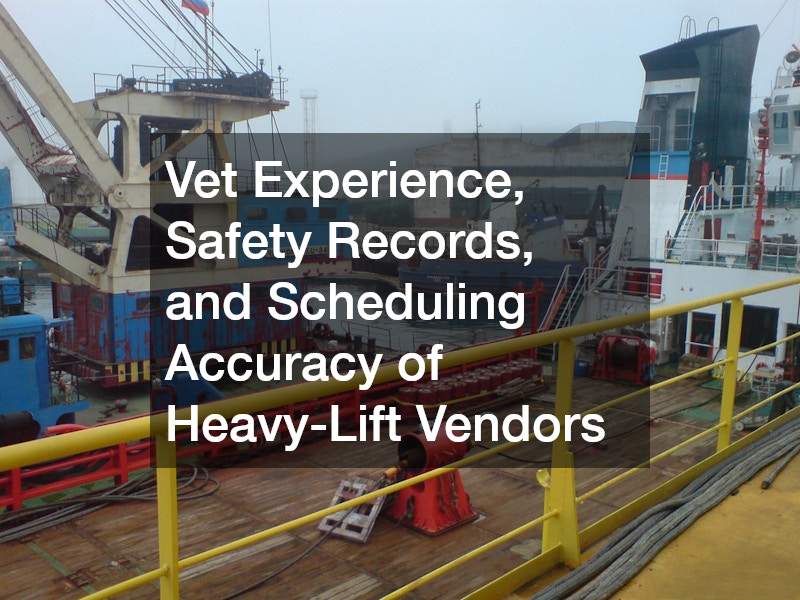
Waterfront construction frequently requires specialized lifting operations that introduce significant safety and logistical risks. Selecting vendors based solely on availability or price can expose projects to delays, damage, or regulatory scrutiny. These risks compound quickly when schedules are tight.
When working with crane companies, decision-makers should prioritize marine experience and documented safety performance. Waterfront lifts involve variables such as wind, tides, limited staging areas, and environmental protections that differ substantially from inland projects. A lack of experience in these conditions increases the likelihood of costly errors.
Key vetting criteria include:
-
Proven experience with marine or waterfront environments
-
Safety certifications and incident history
-
Detailed lift plans and contingency procedures
-
Coordination capabilities with other trades and inspectors
Scheduling accuracy is especially critical. A delayed or aborted lift can cascade into missed inspections, extended equipment rentals, and labor inefficiencies. Investing time in vendor due diligence reduces the likelihood of costly surprises during critical project phases.
Specify Durability, Compliance, and Customization in Fabricated Components
Custom components are often required to meet the unique demands of waterfront environments. Standard materials and off-the-shelf solutions may fail prematurely when exposed to moisture, salt, or constant movement. Early material decisions have long-term consequences.
Projects involving metal fabrication should emphasize durability and regulatory compliance from the outset. Material selection, protective coatings, and fabrication tolerances all influence long-term performance and maintenance requirements. These choices also affect inspection outcomes and insurance considerations.
Decision-makers should focus on:
-
Corrosion resistance suited to local conditions
-
Load ratings that exceed minimum requirements
-
Documentation for inspections and future modifications
-
Coordination between fabricators and installers
Clear specifications reduce rework and disputes while ensuring that fabricated components integrate seamlessly with other systems. Treating fabrication as a strategic element rather than a commodity purchase supports reliability and lifecycle cost control. This approach also improves accountability among vendors.
Mitigate Erosion, Flooding, and Structural Risk Through Site Engineering

Waterfront sites are dynamic environments where soil movement, water flow, and weather events can undermine stability over time. Ignoring these factors during design increases the risk of costly repairs and operational disruptions. Environmental forces rarely remain static.
Properly designed retaining walls play a critical role in managing erosion, supporting structures, and protecting usable space. These systems must be engineered to account for hydrostatic pressure, soil composition, and long-term environmental changes. Inadequate design can create cascading failures elsewhere on the site.
Effective risk mitigation includes:
-
Comprehensive geotechnical analysis
-
Designs that allow for drainage and movement
-
Regular inspections and maintenance planning
-
Integration with landscaping and access features
From a business perspective, site stability protects not only physical assets but also customer safety and regulatory compliance. Proactive engineering reduces the likelihood of emergency repairs and preserves property value. This stability also supports uninterrupted operations.
Reduce Contractual and Regulatory Exposure Through Early Legal Involvement
Legal oversight is often treated as a reactive measure, engaged only when disputes arise. In waterfront projects, this approach significantly increases risk. Early legal involvement helps align contracts, compliance obligations, and operational policies before issues escalate. Prevention is far less expensive than litigation.
Consulting an attorney during planning and construction phases can prevent misaligned expectations and costly misunderstandings. Legal review is especially important when dealing with public access, environmental regulations, and multi-party contracts. These areas often carry heightened liability exposure.
Areas where legal guidance adds value include:
-
Contract structure and risk allocation
-
Regulatory compliance across jurisdictions
-
Liability waivers and insurance alignment
-
Dispute resolution mechanisms
Proactive legal strategy supports smoother execution and protects long-term business interests. It also allows decision-makers to focus on operations rather than crisis management. Over time, this approach reduces both direct and indirect legal costs.
Protect People, Assets, and Operations With Layered Security Planning
Waterfront properties often combine public access with private operations, creating unique security challenges. Open environments increase exposure to theft, vandalism, and unauthorized access, particularly after hours or during peak activity. Visibility alone does not guarantee safety.
Effective access control strategies balance safety with convenience. Systems should be designed to guide behavior, restrict sensitive areas, and provide visibility without disrupting customer experience. Poorly designed controls can frustrate users and staff alike.
Key elements include:
-
Physical barriers and controlled entry points
-
Digital monitoring and credential management
-
Integration with lighting and surveillance systems
-
Clear policies for staff and visitors
Security planning should evolve alongside operations. Regular reviews help ensure that controls remain aligned with usage patterns and emerging risks. This adaptability strengthens both safety and operational efficiency.
Coordinate Specialized Trades and Timelines for Complex Builds
Waterfront projects involve numerous specialized trades whose work must be carefully sequenced. Misalignment between vendors can lead to delays, rework, and budget overruns. Environmental conditions add further scheduling complexity.
Experienced commercial construction companies play a central role in managing these complexities. Their ability to coordinate inspections, material deliveries, and subcontractor schedules directly affects project outcomes. Strong leadership at this level sets the tone for the entire build.
Successful coordination depends on:
-
Detailed scheduling and documentation
-
Clear communication channels among stakeholders
-
Realistic timelines that account for environmental variables
-
Accountability mechanisms for scope and quality
From a business standpoint, disciplined project management preserves capital and accelerates revenue generation. Strong coordination reduces friction and supports predictable execution. Predictability is one of the most valuable outcomes in complex development. It allows stakeholders to make confident financial projections and align staffing, marketing, and operational planning with realistic timelines. Over time, this consistency strengthens lender confidence, investor trust, and overall project credibility.
Turning Waterfront Complexity Into Strategic Advantage
Managing waterfront commercial projects requires more than technical expertise. Success depends on integrating business strategy, technology, and legal oversight into every phase of development and operation. The risks are real, but so are the rewards for organizations that approach these projects with discipline and foresight. Strategic alignment transforms uncertainty into opportunity.
By planning for long-term performance, coordinating specialized partners, and addressing regulatory and operational challenges early, decision-makers can transform complexity into competitive advantage. This approach allows teams to anticipate constraints, allocate resources more effectively, and reduce costly course corrections once projects are underway. Waterfront assets built and managed with intention are better positioned to deliver sustained value, resilience, and profitability in an increasingly demanding commercial landscape. Thoughtful execution today lays the groundwork for stability tomorrow by supporting consistent operations, predictable maintenance cycles, and stronger confidence among investors, regulators, and long-term stakeholders.
corrections once projects are underway. Waterfront assets built and managed with intention are better positioned to deliver sustained value, resilience, and profitability in an increasingly demanding commercial landscape. Thoughtful execution today lays the groundwork for stability tomorrow by supporting consistent operations, predictable maintenance cycles, and stronger confidence among investors, regulators, and long-term stakeholders.